
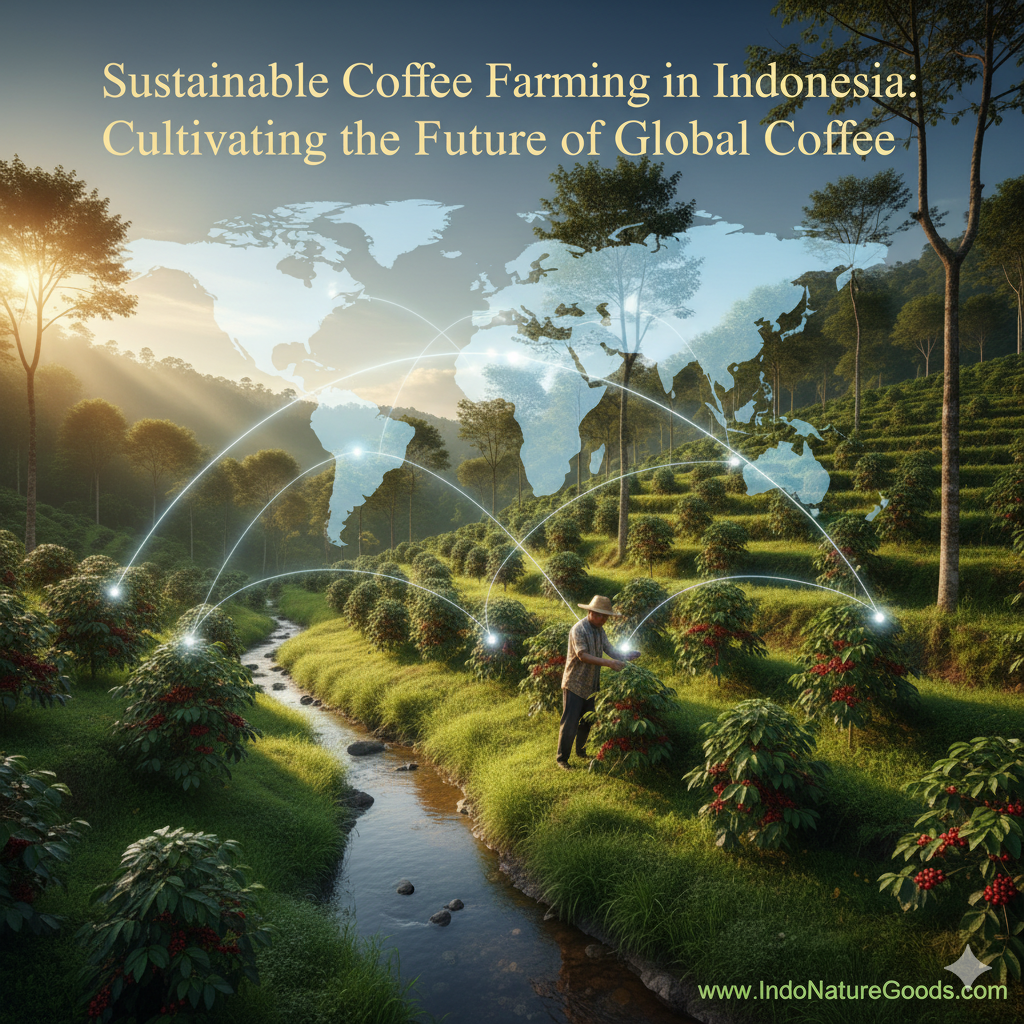
Sustainable Coffee Farming in Indonesia: Cultivating the Future of Global Coffee
Introduction
The world’s love for coffee is endless — but so are the challenges behind it.
Climate change, deforestation, and fluctuating prices threaten coffee farmers worldwide.
In the midst of these challenges, Indonesia has become a beacon of hope — showing that sustainability and profitability can grow together.
At IndoNatureGoods, we believe every bean should not only taste good but also do good — for people, planet, and prosperity.
The Global Demand for Sustainable Coffee
According to the International Coffee Organization (ICO), over 60% of global consumers now prefer sustainably sourced coffee.
Importers, roasters, and café brands are shifting toward origins that guarantee:
-
Eco-friendly cultivation.
-
Fair wages for farmers.
-
Traceability from farm to cup.
This movement has turned Indonesia — with its rich biodiversity and community-based farming — into a key player in sustainable coffee production.
Why Indonesia Leads in Sustainable Coffee Farming
1. Diverse Ecosystems
Indonesia’s volcanic terrain and tropical rainforests create ideal microclimates for shade-grown coffee, which preserves biodiversity and reduces carbon emissions.
2. Smallholder-Driven Production
Over 90% of Indonesian coffee comes from small farmers, ensuring local ownership and community participation.
3. Organic and Low-Impact Practices
Farmers use natural compost, intercropping, and minimal chemical inputs — preserving soil health and water resources.
4. Reforestation and Agroforestry
In regions like Toraja and Aceh, coffee trees are grown under forest canopies, promoting carbon capture and wildlife protection.
These factors make Indonesia one of the world’s most eco-resilient coffee producers.
About IndoNatureGoods.com
IndoNatureGoods is a leading sustainable coffee exporter connecting eco-conscious buyers with ethical farmers across Indonesia.
We work directly with certified cooperatives and farmer groups in:
-
Sumatra (Mandheling, Gayo).
-
Sulawesi (Toraja, Enrekang).
-
Java (Ijen Plateau).
-
Bali (Kintamani).
Our mission:
“To empower Indonesian farmers through sustainability while delivering world-class coffee to the global market.”
Our Sustainability Model
🌿 1. Eco-Certified Farms
All partner farms are certified or undergoing certification under Rainforest Alliance, USDA Organic, and Fair Trade programs.
☀️ 2. Renewable Energy in Processing
Our processing facilities use solar-assisted dryers and water recycling systems to minimize energy waste.
💧 3. Zero-Waste Commitment
Coffee husks are recycled into compost, and wastewater from pulping is treated before release.
🌾 4. Farmer Education & Inclusion
IndoNatureGoods provides training on organic farming, pest control, and quality control, helping farmers increase yield sustainably.
💰 5. Fair-Trade Pricing
We guarantee minimum price protection and quality premiums — ensuring farmers earn more for better-quality harvests.
Product Range (Sustainably Sourced)
All IndoNatureGoods coffee products are traceable, eco-grown, and ethically processed:
-
Arabica Sumatra Mandheling – Grown under natural forest shade.
-
Toraja Arabica – Handpicked and organically processed.
-
Java Estate Coffee – Rain-fed, eco-certified farms.
-
Bali Kintamani Arabica – Citrus-toned, pesticide-free.
-
Robusta Lampung – Sustainably cultivated lowland beans.
Every lot is cupped, graded, and certified for quality and sustainability.
Quality Assurance
Our sustainability promise is backed by measurable standards:
-
ISO 22000 and HACCP compliance.
-
Environmental Impact Assessment (EIA) reports.
-
COA and sustainability documentation for buyers.
-
SCA cupping score verification.
We make “sustainably sourced” not a claim — but a documented fact.
The Export Process
-
Sourcing: Verified eco-certified farms.
-
Processing: Solar-assisted drying and zero-waste milling.
-
Testing: Independent lab analysis and cupping.
-
Documentation: Includes COO, COA, and sustainability certificates.
-
Shipping: Eco-friendly packaging (jute or recycled materials).
Transparency from origin to arrival.
Why Choose IndoNatureGoods
-
Proven record of ethical and transparent sourcing.
-
Certified sustainable coffee supply.
-
Community empowerment programs.
-
Reliable logistics and documentation.
-
Personalized service for long-term import partners.
We don’t just export coffee — we export integrity.
Beyond Coffee
We also apply our sustainability model to other Indonesian commodities:
-
Coconut
-
Ginger
-
Bird’s Nest
-
Skipjack Tuna
Every product follows the same eco-trade principles.
The Human Side
True sustainability is about people.
IndoNatureGoods invests directly in communities through:
-
Education funds for farmers’ children.
-
Microfinance programs for women farmers.
-
Tree-planting partnerships in coffee-growing regions.
Each shipment uplifts hundreds of rural lives — ensuring that sustainability starts at the root.
Testimonials
“IndoNatureGoods helps us maintain our eco-friendly brand reputation — consistent, traceable, and ethical.”
— Importer, Japan
“Their sustainability documentation is detailed and transparent — exactly what our clients demand.”
— Roaster, Germany
Future
The coffee industry is evolving into a green economy.
By 2030, IndoNatureGoods aims to achieve:
-
100% renewable-powered operations.
-
Carbon-neutral exports.
-
Digital traceability for every lot.
We envision a world where every coffee shipment reflects sustainability from soil to sip.
Final Thoughts
Sustainability is no longer optional — it’s the essence of good business.
Through IndoNatureGoods, every cup of Indonesian coffee carries a legacy of care — for the earth, the farmers, and the generations to come.
FAQs
Q1: Are your coffees certified organic?
A1: Yes, many of our partner farms hold organic and Rainforest Alliance certifications.
Q2: Do you provide sustainability reports?
A2: Yes, each shipment includes documentation of sustainable sourcing practices.
Q3: How do you support farmers financially?
A3: Through fair-trade pricing and profit-sharing programs.
Q4: Can buyers visit sustainable farms?
A4: Yes, we organize buyer field visits and cupping sessions in Indonesia.
Q5: Do you ship carbon-neutral?
A5: We currently offset part of our emissions through reforestation, with a full carbon-neutral goal by 2030.