
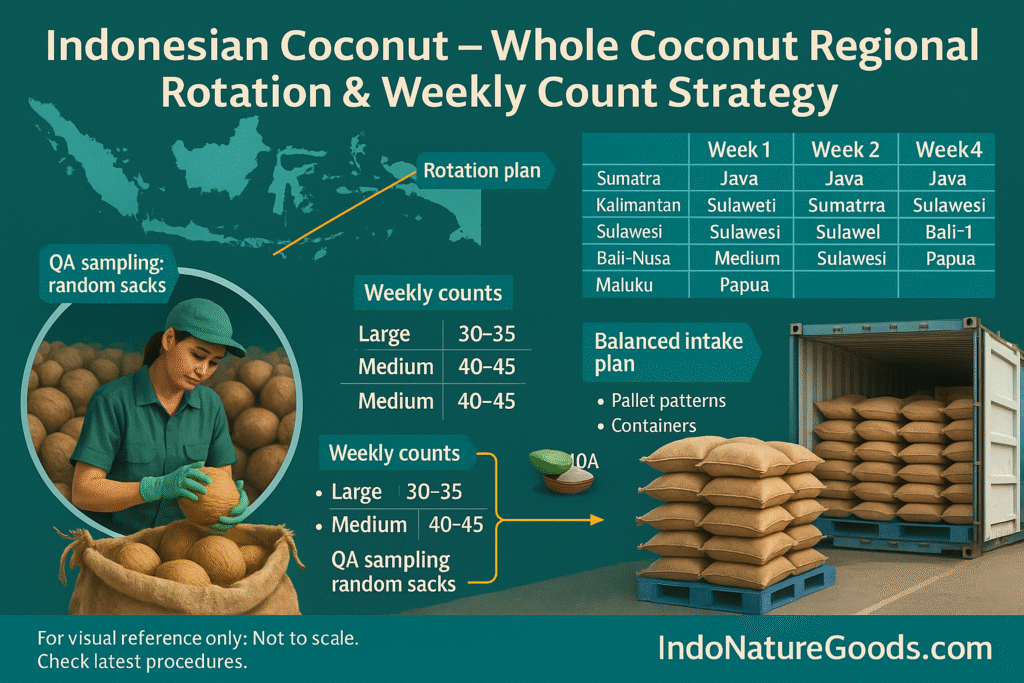
Indonesian Coconut — Whole Coconut Regional Rotation & Weekly Count Strategy | IndoNatureGoods.com
Build a steady Indonesian coconut regional rotation for whole coconuts. IndoNatureGoods.com explains region roles, weekly count strategy, band mix, tolerance rules, and simple intake checks. Product-only scope: mature coconut and young coconut. Use this plan to hold volumes through weather changes and promo weeks.
Headline — coconut regional rotation that keeps counts steady
Whole coconut programs work when regions share the load.
Introduction (hook, global context) — coconut planning that reads simple
Markets shift weekly. Therefore, a rotation plan protects whole coconut counts. Teams move faster, and waste drops.
The Global Demand (why this product is important) — coconut volumes at scale
Retail and foodservice rely on whole coconut for freshness and display value. Consequently, steady counts matter more than perfect forecasts.
Why Choose Indonesian coconut (Indonesia’s superiority) — depth across belts
Indonesia offers whole coconut year-round. As a result, Sumatra, Java, Sulawesi, and Maluku can rotate roles without breaking calendars.
About IndoNatureGoods.com (supplier profile) — coconut discipline in planning
IndoNatureGoods coordinates farm links, size bands, and weekly region notes for whole coconut. Moreover, we publish quick signals so buyers adjust early.
Product Range (whole only) — coconut types under this plan
-
Mature coconut (brown coconut): whole; semi-husked or dehusked per SOP; S/M/L/XL bands.
-
Young coconut (green coconut): whole; trimmed by market style; fixed bundle/carton counts.
Scope remains whole coconut only. No derivatives.
Quality Assurance — coconut intake checks that stay uniform
Keep intake short and visible: shell condition, cleanliness, size/weight band, and freshness cues. Additionally, tag the region on every coconut lot. Consequently, counts compare cleanly across belts.
Coconut regional rotation — mapping roles by week
Rotation keeps pressure low on any one belt. Therefore, assign simple roles and switch with clear triggers.
Sumatra coconut — baseline anchor
Sumatra carries the baseline for whole coconut most months. As a result, S/M/L bands hold, and rejections trend low during routine weeks.
Java coconut — calendar control
Java supports promo windows for whole coconut. Moreover, short lanes help tight ETAs. Bands read consistent through busy periods.
Sulawesi coconut — surge coverage
Sulawesi absorbs spikes in whole coconut demand. Consequently, counts stay stable when promotions extend or weather dips hit other belts.
Maluku coconut — quality stabilizer
Maluku contributes mature whole coconut with strong shells. Therefore, acceptance bands stay calm during routine weeks.
Coconut weekly count strategy — band mix and buffers
First, fix the weekly total. Then split by region and band.
-
Core band (coconut M/L): 70–85% of the plan.
-
Price band (coconut S): 10–20% for cost targets.
-
Feature band (coconut XL): 0–10% for displays.
Add a 5–10% buffer via Sulawesi or Java. Consequently, promos avoid last-minute cuts.
Coconut tolerance language — keep it honest
Show a ± window per coconut band. Publish it on tickets. Therefore, intake decisions stay objective.
Coconut exception handling — weather dips and fast edits
Weather shifts. However, rotation keeps the plan upright.
-
Step 1: move surplus from Sulawesi to cover the week.
-
Step 2: increase Java counts for short hauls.
-
Step 3: tighten bands and reclass off-band coconut when needed.
Consequently, the calendar holds, and the display looks consistent.
Coconut reclass notes — simple and quick
Off-band coconut moves to the next size where possible. Otherwise, reject by rule. As a result, waste stays low.
Why Choose IndoNatureGoods.com (reasons for choosing) — coconut planning strengths
-
One whole-coconut language across regions.
-
Weekly region signals and fast edits.
-
Band tables and tolerance on every ticket.
The Human Side — coconut livelihoods behind the rotation
Stable whole coconut bookings support harvest crews and graders. Training deepens. Families benefit from predictable work.
How to Partner — coconut rotation onboarding in five steps
-
Share weekly coconut totals and promo dates.
-
Lock band tables and tolerance.
-
Assign roles: baseline, calendar, surge, stabilizer.
-
Approve region tags on lot tickets.
-
Run a pilot month; then scale to the quarter.
Testimonials — coconut buyer remarks
“Whole coconut counts held through two promo waves.”
“Region roles made adjustments easy and fast.”
Future — coconut planning with clearer signals
Expect sharper week-by-week origin notes for whole coconut. Consequently, teams will align promos with fewer surprises.
Final Thoughts — coconut rotation that works
Map the belts. Fix the bands. Publish the roles. With that focus, whole Indonesian coconut stays steady from week to week.
FAQs (5) — coconut rotation & counts
-
Which regions anchor whole coconut? Sumatra as baseline; Java for calendar control.
-
How big should the coconut buffer be? 5–10% via Sulawesi or Java.
-
What holds coconut quality during busy weeks? Band discipline and clear tolerance.
-
How do you tag coconut origin? Region code on the lot ticket, tied to the week.
-
Do you supply coconut derivatives? No—whole coconut only.