

Indonesian Coconut — Whole Coconut Grades, Sizes, and Regions | IndoNatureGoods.com
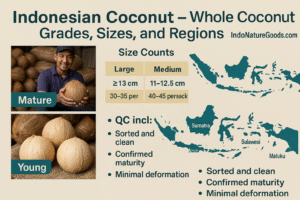
Source whole Indonesian coconut with clear grade language, size bands, and origin regions. IndoNatureGoods.com explains demand, Indonesia’s strengths, supplier profile, grading cues, and simple QA for mature and young whole coconut. Product-only scope. No derivatives. Direct specs. Clean approvals for B2B buyers.
Headline — coconut sourcing for wholesale and export buyers
Whole coconut needs simple rules. Clarity speeds decisions and protects calendars.
Introduction (hook, global context) — coconut demand with simple specs
Global buyers want steady whole coconut. Therefore, we define grades, sizes, and regions in plain terms. Approvals move quickly. Teams gain confidence.
The Global Demand (why this product is important) — coconut at volume
Foodservice and retail programs rely on whole coconut for freshness and presentation. Consequently, consistent counts and stable grading reduce waste. Clear language lowers risk.
Why Choose Indonesian coconut (Indonesia’s superiority) — regions and rhythms
Indonesia produces year-round whole coconut. Moreover, key belts in Sumatra, Java, Sulawesi, and Maluku provide depth. As a result, buyers secure continuity through seasonal shifts.
About IndoNatureGoods.com (supplier profile) — coconut program owner
IndoNatureGoods coordinates farm links, field sorting, and simple acceptance bands for whole coconut. Additionally, we publish availability notes by region. The plan stays practical and auditable.
Product Range (whole only) — coconut grades and size bands
-
Mature coconut (brown coconut): whole; semi-husked or dehusked per SOP; agreed coconut size/weight bands (S/M/L/XL).
-
Young coconut (green coconut): whole; trimmed to market style; agreed coconut count per bundle or carton.
Scope remains whole coconut only. No derivative coconut products appear in this lane.
Coconut grading — field language buyers can approve
-
Shell integrity (coconut): firm shell, sound crown, no cracks.
-
Cleanliness (coconut): low surface soil; tidy trimming on young fruit.
-
Size & weight (coconut): consistent band per PO; variance limits stated.
-
Freshness cues (coconut): for young fruit, bright husk; for mature fruit, dry husk and steady shake feel.
This language reads fast for QA and procurement.
Quality Assurance — coconut checks that matter at intake
Whole coconut passes a short checklist. First, graders verify shell condition and trim. Then they confirm size band and exterior cleanliness. Finally, they record region and harvest window. Consequently, lots read consistent across weeks.
Coconut trace notes — regions and calendars
Origin notes stay attached to the coconut lot. Therefore, teams match promotions and store drops to real harvest windows. Planning becomes simpler.
Why Choose IndoNatureGoods.com (reasons for choosing) — coconut strengths
-
Region-mapped whole coconut with clear grade language.
-
Stable size bands and realistic availability signals.
-
Direct communication from farm to booking.
The Human Side — coconut livelihoods and training
Whole coconut programs support harvest crews and local graders. Training improves cut discipline and sorting accuracy. Families benefit as demand stays steady.
How to Partner — coconut onboarding in five quick steps
-
Share whole coconut type (mature or young), regions, and size bands.
-
Confirm grade language and acceptable variance.
-
Align weekly counts and a simple availability calendar.
-
Approve trim style for young coconut where relevant.
-
Start with a pilot lot, then scale by region.
Testimonials — coconut buyer trust
“Whole coconut counts were accurate across three weeks.”
“Grade language was simple; intake checks took minutes.”
Future — coconut clarity and origin signals
Expect tighter band naming for whole coconut and broader use of region tags. Consequently, assortments read cleaner for retail and foodservice buyers.
Final Thoughts — coconut sourcing with focus
Keep the scope tight. Define whole coconut grades and sizes. Match regions to the calendar. With that focus, programs stay predictable and easy to approve.
FAQs (5) — coconut (whole product only)
-
Which whole coconut types do you supply? Mature brown coconut and young green coconut in agreed trims.
-
How do you define coconut sizes? By simple bands (S/M/L/XL) tied to weight or circumference, with set variance.
-
Which coconut regions are common? Sumatra, Java, Sulawesi, and Maluku, subject to seasonality.
-
Can we lock a specific coconut count per bundle? Yes; counts are confirmed at RFQ and held by lot.
-
Do you offer coconut derivatives? No; this program supplies whole coconut only.